CTV’s Real Divide Isn’t PMP Vs. Open Market. It’s Quality Control
With proper quality controls, open bidding connected TV (CTV) advertising can drive performance.CTV is a fixture of the media mix. Streaming accounts for 47.5% of total US television viewing time and is expected to surpass linear TV in daily time spent this year. Furthermore, CTV now represents 47.5% of total programmatic ad spend, making it the largest programmatic environment. Yet, buyers are increasingly scrutinizing that investment.Private marketplaces (PMPs) emerged as the industry’s solution for safe, effective CTV ad buys, offering curated supply, set floor prices and perceived quality assurances. Today, they dominate CTV: 99.2% of programmatic spend transacts through PMPs, according to the Association of National Advertisers (ANA). The share of CTV PMPs run through Basis’ platform is lower than that, but the observable trend is the same – CTV ad buyers now overwhelmingly prefer PMPs.But what’s wrong with the open market?Fears of fraudTo be fair, advertisers have valid concerns about media quality. No one wants to buy fraudulent inventory or invalid traffic.When it comes to CTV, 63% of marketers struggle to determine whether their campaigns reach real viewers, and 57% worry a meaningful portion of spend is lost to fraud. However, 72% say CTV outperforms campaign baselines. Clearly, there is confidence in the channel.Although historical analysis of top CTV apps using pre-bid filters and internal supply chain controls can show that the fraud rates and viewability between open market and PMPs are different, it’s not a dramatic divide.The key variable is not transaction type but protection. Without safeguards, over 25% of CTV impressions may fail minimum quality standards, according to our analysis. But with pre-bid filtering, app-level verification and supply-chain validation, open market performance improves significantly. The question is what protections are in place.Misaligned pricingHowever, there is a distortion in CTV. Programmatic infrastructure treats vastly different CTV content environments as equivalent. High-quality programming and low-viewership niche channels often enter auctions under similar CPM floors, driven more by simple device classification than actual audience engagement. An ad opportunity could be a pre-roll before a movie, a placement at a TV show’s end credits, a display banner on static content on a streaming device or something else. In one example I observed, one low-quality placement type quickly secured 25% of a campaign’s budget despite app-ads.txt enforcement, pre-bid filtering and direct targeting. It wasn’t fraudulent, but it may not align with what buyers typically expect from CTV.When there is legitimate inventory, transparently sold, at prices the viewing context does not justify, buyers will want to mitigate the issue.Effectiveness of PMPs and curation PMPs emerged as the answer to a real problem. In the early days of programmatic CTV, supply chain opacity made it nearly impossible to target specific publishers directly. Private deals were the only reliable path to known inventory. That is no longer the case. Supply-chain transparency improvements mean buyers can now reach premium publishers through the open market with the same directness that once required a negotiated deal.Meanwhile, the PMP pool has gotten muddier. Many deals with premium labels and premium CPMs are blending that inventory with lower-quality supply to meet volume commitments. The packaging looks clean. The delivery tells a different story: a mix of high-quality inventory alongside supply from unverifiable intermediaries. When spend bleeds into unmeasurable, low-quality inventory, outcomes suffer. Curation emerged as the performance-oriented evolution of the PMP model and it retained the convenience buyers had grown accustomed to. But in most cases, buyers have even less control and visibility than they did with PMPs. They cannot determine what inventory they are buying. Reporting on where spend flows is limited at best. The opacity that eroded trust in PMPs deepened.For performance specifically, curation is only defensible when the buyer’s own data is part of the package construction. Without first-party signals, conversion history or attribution logic, a curated package is a supply-side bet with a performance price tag.Effective CTV buyingEvaluating the value of CTV advertising between open market vs. PMPs vs. curation should be based on what buyers can achieve independently with strong controls in place. Most buyers may not be using everything available to them in their DSP.In its Q1 benchmark report, the ANA grouped advertisers into performance cohorts and found a striking gap: top-performing advertisers converted 54% of programmatic spend into qualified impressions, compared to just 32.1% for lower performers. Notably, the gap wasn’t driven by transaction costs. Both cohorts spent nearly identical amounts on PMPs versus the open market and paid similar fees to do so. The real difference was media productivity. Top-cohort advertisers are actively managing waste out of the system, while their lower-performing counterparts are simply absorbing it. This isn’t a pricing problem; it’s a quality management problem. The more durable fix is a supply intelligence layer that classifies inventory before the bid is placed and enforces sensible defaults without requiring buyers to build their own defense campaign by campaign. That means knowing which apps are premium, which are legitimate (but mid-tier) and which are unverified or excluded entirely – and then letting buyers control where their spend goes across those distinctions. Curation and PMPs have a role, but they are most defensible when built on top of that kind of systematic classification rather than as a substitute for it. The question the industry consistently avoids is whether structured buying is solving a problem that buyers could not solve with better tooling. In CTV, that question has a more concrete answer now than it did a year ago.“On TV & Video” is a column exploring opportunities and challenges in advanced TV and video. Follow Basis and AdExchanger on LinkedIn.
 |
| |
By Ayse Pamuk, Basis
|
| Partner content |
|
|
DOOH You Like Women’s Sports?
Women’s sports is having a moment as publishers, advertisers and the tech vendors in between try to capitalize on rising viewership. Digital out-of-home is having a moment, too.
Continue Reading ▷ |
Sweetgreen Tapped Atmosphere TV To Introduce World Cup Viewers To Its Wraps
Sweetgreen turned the World Cup into a marketing moment for its new wraps, running video ads in public viewing spaces through Atmosphere TV.
Continue Reading ▷ |
| In The News |
|
Be careful about terminating too many employees at once; they might just become your competition. At least, that’s what could happen if former “60 Minutes” Executive Producer Bill Owens has his way, according to the New York Post.
- Owens resigned from CBS last year in response to how parent company Paramount handled its lawsuit with President Trump. Sources suggest that Owens wants to raise $50 million for a rival investigative news program.
- Another source claims that the recently fired “60 Minutes” correspondent Scott Pelley is also on board, and that his fiery rant against current heads Bari Weiss and Nick Bilton on his way out the door was actually a publicity ploy.
- People close to Owens have denied the rumors, however. And even if the rumors are true, a new production would likely involve a massive pay cut for any ex-”60 Minutes” correspondents who sign on – a fate that’s unfortunately pretty typical for laid-off media workers who pivot to independent projects.
- The Takeaway: Starting a new TV show is a trickier prospect than a new Substack newsletter or worker-owned website, which is where many journalists end up after losing positions at legacy outlets. Still, the possibility is an interesting one, particularly in a world where online streaming video is increasingly lumped together with television as a medium.
More like Multi-Camazon. Amazon just greenlit its first-ever multi-camera sitcom – and it’s also going to be entirely improvised.
- “DINKS” (meaning, “dual income, no kids”) is the brainchild of “Friends” creator Marta Kauffman. The sitcom will star real-life comedy power couple Paul Scheer (“The League”) and June Diane Raphael (“Grace and Frankie”).
- Improv isn’t the only thing that makes this show unique. It’s also being co-produced by Publicis Media Content Innovation (PMCI), an offshoot of the massive agency holding company Publicis Groupe. According to Chief Creative Officer Eric Levin, the show will be brought “exclusively” to Publicis clients and represents a new model of television financing that’s “driven by partnerships.”
- The Takeaway: Branded content is a time-honored entertainment tradition that started long before television did. (Example: Procter & Gamble started funding “Guiding Light” when it was still a radio show in the late ‘30s, long before it moved to TV in 1952.) But it’s rare to see an ad agency footing the bill for a TV series – especially without pitching it to a specific brand first.
No, it’s not a marketing stunt. Wonder Man has died and resurrected several times in Marvel Comics lore, so fans of “Wonder Man” might be forgiven for assuming that the Emmy-nominated Disney+ show hasn’t actually been canceled after all.
- Showrunner and co-creator Andrew Guest confirmed to fans on TikTok that the surprising cancellation news from last week was real after all. Production was supposed to begin next year and everyone involved had been excited to continue the series, Guest claimed.
- Yahya Abdul-Mateen II, who was nominated for an Emmy Award for his role as Simon Williams, also reacted on Instagram over the weekend. “Thank you for watching,” he wrote in the caption. “And uhh… See you at the EMMYS.”
- The Takeaway: It’s possible that the cancellation of such a beloved show reflects a change in strategy for Marvel Studios, which rapidly expanded its TV production schedule in 2019 to coincide with the launch of Disney+. Since then, the films have declined at the box office (with the exception of the still record-breaking “Spider-Man” franchise), causing some to speculate that the studio stretched itself too thin.
|
|
|
| STATISTICALLY SPEAKING |
|
Good luck reaching teens on TikTok or YouTube during classes. A new Pew Research Center survey finds that more Americans now support all-day school cellphone bans (48%) than oppose them (43%), a total reversal compared to 2024.
|
|
|
|
| New And Returning Series |
|
Freeform’s new true crime documentary series, “Somebody Knows Something,” will premiere on Aug. 10. Starring survivor advocate Kara Robinson Chamberlain, each episode of the show will focus on a different unsolved murder or missing persons case.
Also on Aug. 10, former weekend “Today” host Peter Alexander is launching a new 11 a.m. morning show on MS Now, called “State of Play.” The program will deliver original reporting and analysis related to “the biggest political and national stories shaping the day,” according to Senior VP of Programming Greg Kordick.
Today’s Premieres
Disney+: “Wizards Beyond Waverly Place” Season 3 at 8 p.m.
HBO: “Hard Knocks: Training Camp with the Seattle Seahawks” Season 22 at 9 p.m.
Hulu: “Betrayal” Season 4
MHz Choice: “Das Boot” Season 2
Netflix: “Badly in Love” Season 2
OutTV: “The Dressing Room” Season 2
Paramount+: “Special Ops True”
|
|
|
| Ratings |
|
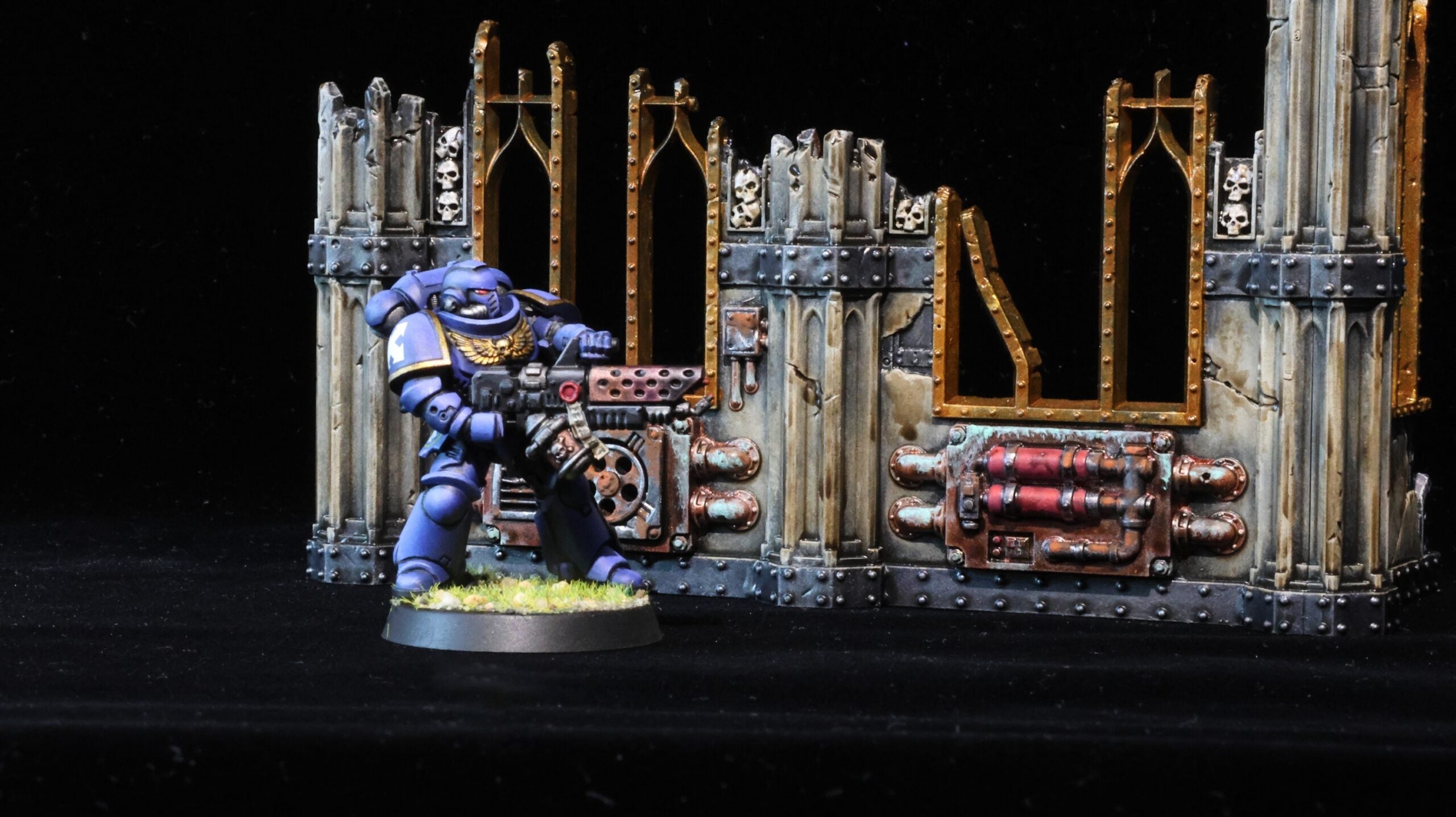
Amazon MGM Studios, Blur Studios (“Secret Level”) and Games Workshop ordered an animated “Warhammer 40,000” event series based on the British miniature wargame of the same name, developed by Games Workshop. British actor and notable “Warhammer” superfan Henry Cavill (“The Witcher”) will executive produce the animated series, in addition to the previously announced live-action series that Cavill will also star in.
Finally, Hulu gets its hands on some new romantasy fodder. The streaming network is teaming up with 20th Television to develop a series based on “The Poison Daughter,” a best-selling novel by Sheila Masterson that was self-published in 2025.
- This is not either studio’s first attempt at capturing the increasingly popular literary genre. Hulu and 20th TV previously optioned an adaptation of Sarah J. Maas’ “A Court Of Thorn And Roses” with “Outlander” showrunner Ronald D. Moore, which fell apart in 2025 after four years of development.
- Other studios are also moving forward with their own romance-fantasy book-to-show series. Prime Video has “Fourth Wing” (by Rebecca Yarros) and Sony Pictures Television has “From Blood and Ash” (by Jennifer L. Armentrout).
Shadowbox Studios is taking over management of Kaufman Astoria Studios, known as the filming location for hit TV shows like “Succession,” “And Just Like That” and “Sesame Street.” Kaufman Astoria Studios was established in 1920 as the East Coast home of Paramount Pictures.
- The management switch comes on the heels of a foreclosure complaint that Deutsche Bank filed against Kaufman Astoria Studios and its prior owner, Hackman Capital Partners. The complaint alleges that the studio failed to repay a $340 million loan, which was due in the fall.
- As part of the proceedings, the court appointed a new operator for the Queens-based studio. Shadowbox Studios intends to integrate existing staff into its own workforce.
- Shadowbox Studios vocalized intentions to meet today’s production needs, and is currently building a production studio in Australia. However, the loan repayment details for Kaufman Astoria remain unclear.
Dave Bautista is in talks to play Kratos in “God of War,” the video game adaptation series from Amazon MGM Studios and Sony Pictures Television. He would be replacing Ryan Hurst (“Sons of Anarchy”), who was injured during filming in late June. Once the role is officially recast, production will pick back up this fall in Vancouver.
The latest season of Food Network’s “The Great Food Truck Race” reached more than 2.4 million P2+ viewers across platforms, marking the best season kickoff for the series since 2019, based on demographic ratings for viewers ages 25-54.
|
|
|
| Trivia |
|
Today’s Trivia Question
In which episode of “Game of Thrones” (2011-2019) does Joffrey Baratheon spoil a major plot point yet to come in the prequel series “House of the Dragon” (2022-)?
(Email answers to trivia@cynopsis.com and include your name, company and city. Answers limited to four per time zone.)
Yesterday’s Trivia Answer
Danny and Becky were co-hosts of what show on “Full House” (1987-1995)? “Wake Up, San Francisco.”
Congrats to: Justin Pierce-JP Consulting Group/LA; Tom Moore-Kalt Productions/LA; Susan Nessanbaum-Goldberg-M and S Entertainment/LA; Melissa Friedman/LA; Wendy Holmes/Denver, CO; Savannah Hilliard-Back Roads Entertainment/TX; Ashley Cajthaml-Spectrum Reach/Overland Park, KS; Rosemary Cunningham-METV Networks/Chicago, IL; Dan Quitério/NYC; Matt Marini-Paramount/NYC; Stephen Warren, PhD-Northeastern University/Boston, MA; Joe Lyons-NBC Sports/FL
|
|
|
|
|
|