|
|
| Thursday, August 20, 2026 |
|
|
Good morning! Today, get ready for:
- Why Home Screen TV Ads Are Getting Easier To Buy
- MS Now’s New Streaming Service Gets A Subscription Price
- Catherine Zeta-Jones Is Out For Revenge
|
|
|
|
| Partner content |
|
|
Future-proof your local TV campaigns. Read our breakthrough AI data report.
AI is transforming local TV advertising. Get the fresh data, performance benchmarks, and real-world strategies you need to scale faster. Download the Local Lens report today to unlock enterprise intelligence driving our industry forward.
Get the report
|
|
|
How Programmatic Home Screen Ads Are Becoming More Standardized (And More Accessible)
 |
By Victoria McNally
|
How long does it take you to decide what to watch after you turn your TV on?
According to Nielsen’s 2023 State of Play report, it takes the average viewer around 10.5 minutes. (Put another way, if your TV started playing a random sitcom episode when you turned it on, you’d be halfway through the second act before most other people had even made up their minds.)
This key decision-making time could be an ideal time to reach audiences with ads, as they’re likely to be engaged and looking directly at the screen. However, integrating new ad placements into home screens has been a slow process for TV operating systems (OS) and original equipment manufacturers (OEMs), particularly when it comes to programmatic deployment. Most OS providers, like Roku, Samsung and Fire TV, have strict creative standards, unique technical specs and direct pricing for these placements, none of which is conducive to programmatic methods of buying.
But now that availability and interest have increased, that exclusivity is starting to change. Or, at the very least, it’s getting easier to work around.
Last year, ad tech platform Nexxen began making native home screen ads programmatically available across a growing list of TV OEMs in Europe and the US, starting with V (formerly VIDAA) in September and expanding to include TCL and TiVo Ads.
Originally, these integrations were developed as one-to-one activations, said Nexxen Chief Customer Officer Kara Puccinelli. Advertisers had to make all of their home screen ad buys separately for each OEM, even from within Nexxen’s platform. They were still able to partake in programmatic benefits, like dynamic pricing, data enablement and connection, but couldn’t consolidate all their buys and scale up across different inventory sources.
On Thursday, after months of beta-testing with clients, Nexxen announced the launch of new standardization tools that will allow advertisers to activate campaigns quickly across more than one OEM. Now, advertisers only have to upload their creative once using Nexxen’s universal spec, and all the formatting gets updated across their system with the use of AI-assisted resizing tools.
As a result, the onboarding time for new OEM partners has dropped by as much as 50% with Nexxen’s universal spec, said Puccinelli. Meaning, the platform is anticipating a lot more home screen inventory availability in the near future.
Using every part of the advertising funnel
Not surprisingly, entertainment brands were early adopters to the home screen ad experience. Given how endemic they are to the larger environment of content discovery, you might not even clock them as ads while you’re deciding what to watch.
But as home screen ads become more accessible – and, more importantly, more measurable – they’re also opening up to a much wider base of marketers and brands.
“What we’ve seen is a big evolution away from just media and entertainment brands being interested in this type of inventory to really opening up to other types of performance-driven advertisers, in addition to awareness-driven advertisers,” said Puccinelli.
Which isn’t to say that CTV is becoming a pure performance play for these types of advertisers. At digital media agency Brainlabs, brand awareness buys seem particularly resonant or even “overrepresented” in their clients’ media mix models (MMMs), said Head of Programmatic Ben Kahan.
“We’re finding more and more that CTV and upper-funnel advertising is being utilized as an effective lower-funnel performative media driver,” Kahan said.
Brainlabs previously worked with Nexxen to buy CTV inventory for a few of their clients but first began discussing home screen ads in February, Kahan told me. At the time, some of Brainlabs’ advertising clients felt they were already saturated in traditional CTV ad breaks and were looking for new ways to reach audiences there. Home screens felt like a perfect fit because, unlike the standard mid-roll ad, they don’t interrupt the content a viewer is trying to watch.
Currently, Brain Labs is testing out Nexxen’s home screen ads with a retailer that’s already seen lots of success with a top-down, upper-funnel approach. How the format’s impact will manifest in the retailer’s MMM remains to be seen, but so far, early results are promising.
Although Kahan said Nexxen did a lot of the heavy lifting for Brainlabs’ first foray into programmatic home screen ads, he also expressed enthusiasm for the potential that more standardization will bring.
“There is definitely huge fragmentation when it comes to these nonstandard formats,” said Kahan. “Having standardization means that we can do better in terms of tooling, and it’s a lot cheaper to operationally stand something like this up at scale.”
|
| Partner content |
|
|
Nielsen’s Latest Updates Aim To Remove Bias From Its Measurement Strategy
Just in time for new TV programming to hit the screens in September, Nielsen is rolling out a few upgrades to its video measurement currency that will go live by the end of August
Continue Reading ▷ |
The Agency Black Box Is Breaking. Horizon Media’s Bob Lord Explains Why
According to Horizon Media’s Bob Lord, most agencies are trying to solve the wrong problem by obsessing over cost efficiency at a time when AI has quietly unlocked something far more valuable: the ability to become a growth partner to advertisers.
Continue Reading ▷ |
| In The News |
|
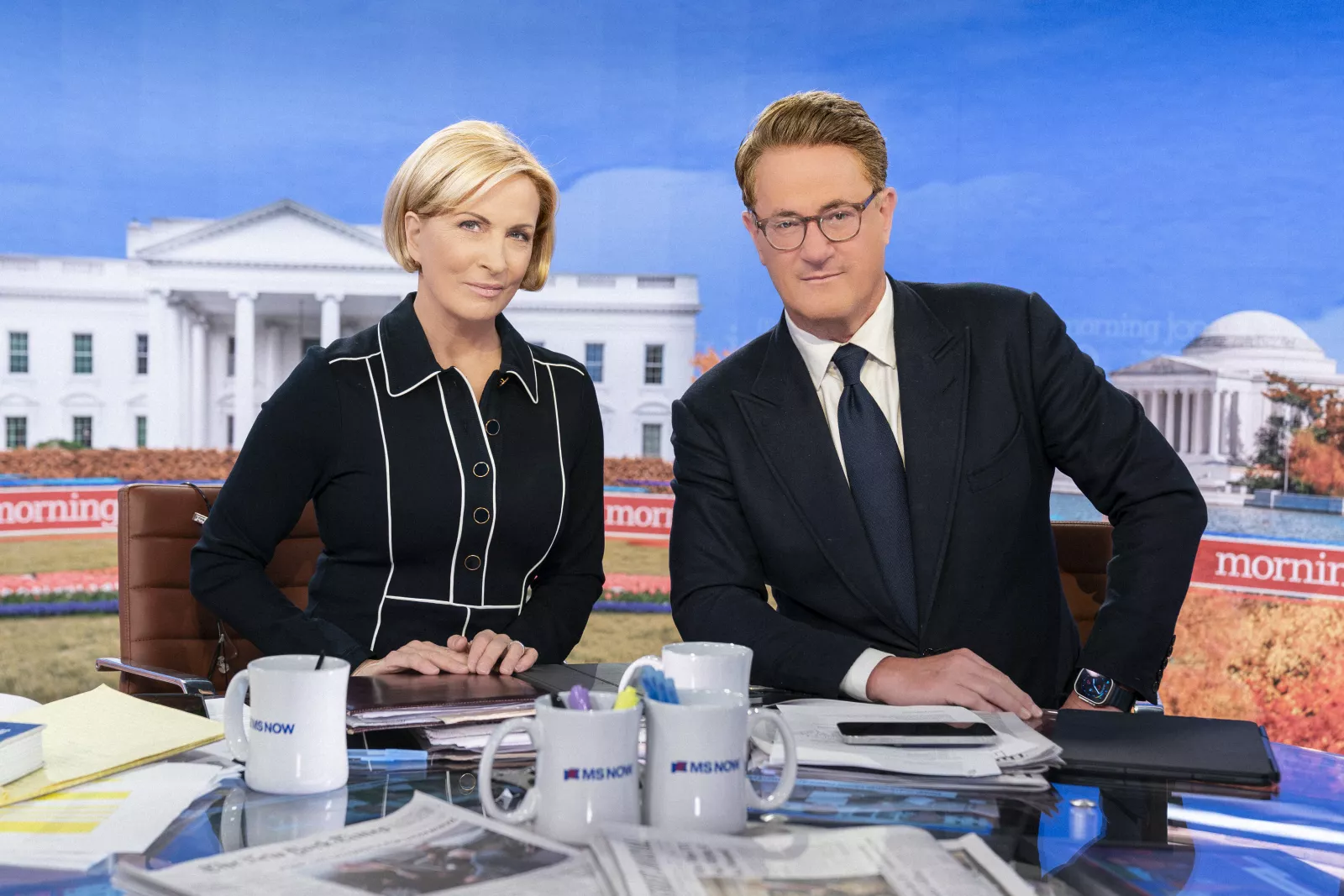
Mika Brzezinski and Joe Scarborough on the set of MS Now’s “Morning Joe”
MS Now… later. Starting Sept. 9, Versant Media’s new MS Now direct-to-consumer service will offer a subscription-based “Membership” pricing for $7.99 per month, or $79.99 annually. The new MS Now service will include access to livestreams and online features that allow subscribers to engage directly with a roster of journalists, contributors and other community members.
- As a point of comparison, CNN All Access is $6.99 a month, while Fox Nation is $8.99. That puts MS Now, the last of the three major cable news networks to develop a streaming service, square in the middle of the pack.
- What about ads? If there is an ad tier, it will likely be managed by NBCUniversal (and, by extension, Comcast, at least for the time being). Although Comcast spun off Versant earlier this year, Versant will still use NBCU’s ad tech stack for at least another upfront cycle, thanks to a two-year agreement signed in 2025.
Americans are more satisfied with their subscription TV plans than ever – depending on your definition of “TV.” That’s according to the latest American Customer Satisfaction Index (ASCI) Entertainment Study, which assigns scores to various content categories every year.
- ASCI’s definition of “subscription TV services” only includes broadcast and cable providers (e.g., Verizon Fios, DirecTV, Cox) as well as services that offer live streaming versions of those same channels (e.g., Sling TV, Fubo, YouTube TV). Meanwhile, video on-demand and free ad-supported TV channel services (Prime Video, Netflix, The Roku Channel, YouTube Premium, etc.) instead get the category “video streaming services.”
- Using those definitions, subscription TV grew 3% to an ASCI score of 72, while streaming actually slipped 1% to 77.
- Interestingly, “cord-stackers” – meaning, consumers who subscribe to both types of services – are the most satisfied segment at a score of 80. “Cord-nevers,” or people who have only ever used streaming, on the other hand, are the least satisfied (with a 75 score) despite being the largest share of respondents (28%).
- The Takeaway: Streamers have already started leaning into the same bundling structures that cable relied on for decades. Maybe taking a few more lessons from cable will keep streaming customers from feeling dissatisfied, even in the face of price hikes, UX issues and content availability.
Studio production and healthy competition aren’t the only things at stake if Paramount Skydance acquires Warner Bros. Discovery. Employment could suffer, too.
- A new study from CVL Economics and the Department of Economic Opportunity found that nearly 4,500 film and TV jobs could disappear over the course of three years if the merger makes it past anti-competition lawsuits, reports The Wrap.That’s just in Los Angeles County alone, which currently supports more than 312,000 workers – more than half of whom are in the entertainment sector.
- Hollywood job cuts become even more drastic if Paramount CEO David Ellison makes good on his threat to relocate the company’s HQ somewhere else.
- Zooming out beyond LA, the megamerger could make more than 15,500 jobs obsolete around the globe when (or if) the two media behemoths join forces. The elimination of duplicative positions in shared functions would include roles related to tech, corporate and real estate in addition to entertainment and production.
- The Takeaway: As much as Paramount tries to convince investors and the entertainment industry its intended acquisition would create a “stronger, creative-first company” that supports healthy competition and employment, the numbers seem to be telling a different story.
|
|
|
| STATISTICALLY SPEAKING |
|
Take care before you start doing business with a digital creator – according to Surfshark’s latest report, fake engagement on social media is cheaper than one might expect. Paying for 1,000 views on TikTok, for example, only costs $1.40 on average.
|
|
|
|
| New & Returning Series |
|

Catherine Zeta-Jones in “Kill Jackie”
AMC+ dropped new trailer art for the revenge thriller series “Kill Jackie,” based on the novel “The Price You Pay” by Nick Harkaway. The new series stars Oscar, BAFTA and Tony Award-winning actor Catherine Zeta-Jones (“Wednesday”), and premieres in the US on AMC+ Oct. 2.
“Bad Monkey” Season 2, starring Vince Vaughn (“True Detective”) and based on the best-selling novel by Carl Hiaasen, will arrive on Apple TV starting Dec. 2.
TODAY’S PREMIERES
Disney+: “Disney Worldbuilders”
Fox: “Celebrity Crime Scene: Princess Diana” at 8 p.m.
Netflix: “Blood Sacrifice”; “Outer Banks” Season 5; “S&X”
|
|
|
| In Other News |
|
Here are two words you don’t associate with David E. Kelley: nature documentary. The iconic TV showrunner is executive producing a YouTube streaming series called “Live Migrations,” about the migratory habits of various animal species.
Despite being announced at Paramount’s upfront presentations in 2022, there won’t be a “Yellowstone” spinoff about 6666 Ranch after all, showrunner Taylor Sheridan recently confirmed. After buying the historic working ranch in 2020, Sheridan told the “Rodeo Time” podcast that he has no interest in fictionalizing a place “where real people work.” (The fact that Sheridan jumped ship from Paramount to NBCUniversal after the Skydance merger probably didn’t hurt, either.)
Hulu will pick up two new shows as part of a licensing deal with distribution company Banijay Rights: the three-part docuseries “The Promise: Finding My Mother’s Killer” and Australian LGBTQ+ drama “Invisible Boys.”
Hulu also ordered a second season of “Good American Family,” the Ellen Pompeo-produced anthology series based on ripped-from-the-headlines true crime stories. This new season will cover the Lorena Bobbitt case, with the real-life Bobbitt joining as a consultant.
Welcome to yet another way to watch live sports. Sports commentators Sal Licata (WFAN/SNY), Jimmy Traina (Sports Illustrated) and John Jastremski (WFAN/The Ringer) announced the launch of a creator-driven sports media startup called Underscore. The platform, which is launching Sept. 8, will stream daily live programming, publish daily newsletters on Substack and host in-person events featuring exclusive interviews.
World Within Studios and Religion of Sports announced the Sept. 10 premiere date of an episodic documentary series called “How to Change the World.” The series is executive produced by Mark Cuban, Geralyn Dreyfous and Gotham Chopra, among a handful of other popular entrepreneurs. It will be available to stream for free on World Within Studios’ YouTube channel.
|
|
|
| Trivia |
TODAY’S TRIVIA QUESTION
What long-running ‘90s teen drama inspired a huge boom in the number of baby boys named “Dylan”?
Email answers to Trivia@Cynopsis.com and include your name, company and city/state (don’t forget!). Only the first four correct responses from each time zone will be included.
YESTERDAY’S TRIVIA ANSWER
On “The Donna Reed Show” (1958-1966), what profession was Donna’s on-screen husband, Alex Stone (played by Carl Betz), employed in? He was a pediatrician.
Congrats to: Justin Pierce-JP Consulting Group/LA; Tom Moore-Kalt Productions/LA; Susan Nessanbaum-Goldberg-M and S Entertainment/LA; David Garver-Loyola Marymount University/Playa Vista, CA; Wendy Holmes/Denver, CO; Mark Wajda/Cleo, FL; Greg Moloznik-Focus Media 121/Lakewood Ranch, FL; Phyllis McQuillan-MSG Networks/NY; Sandra Mueller-KTLA/LA;
|
|
|
|
|
|