|
By Victoria McNally
|
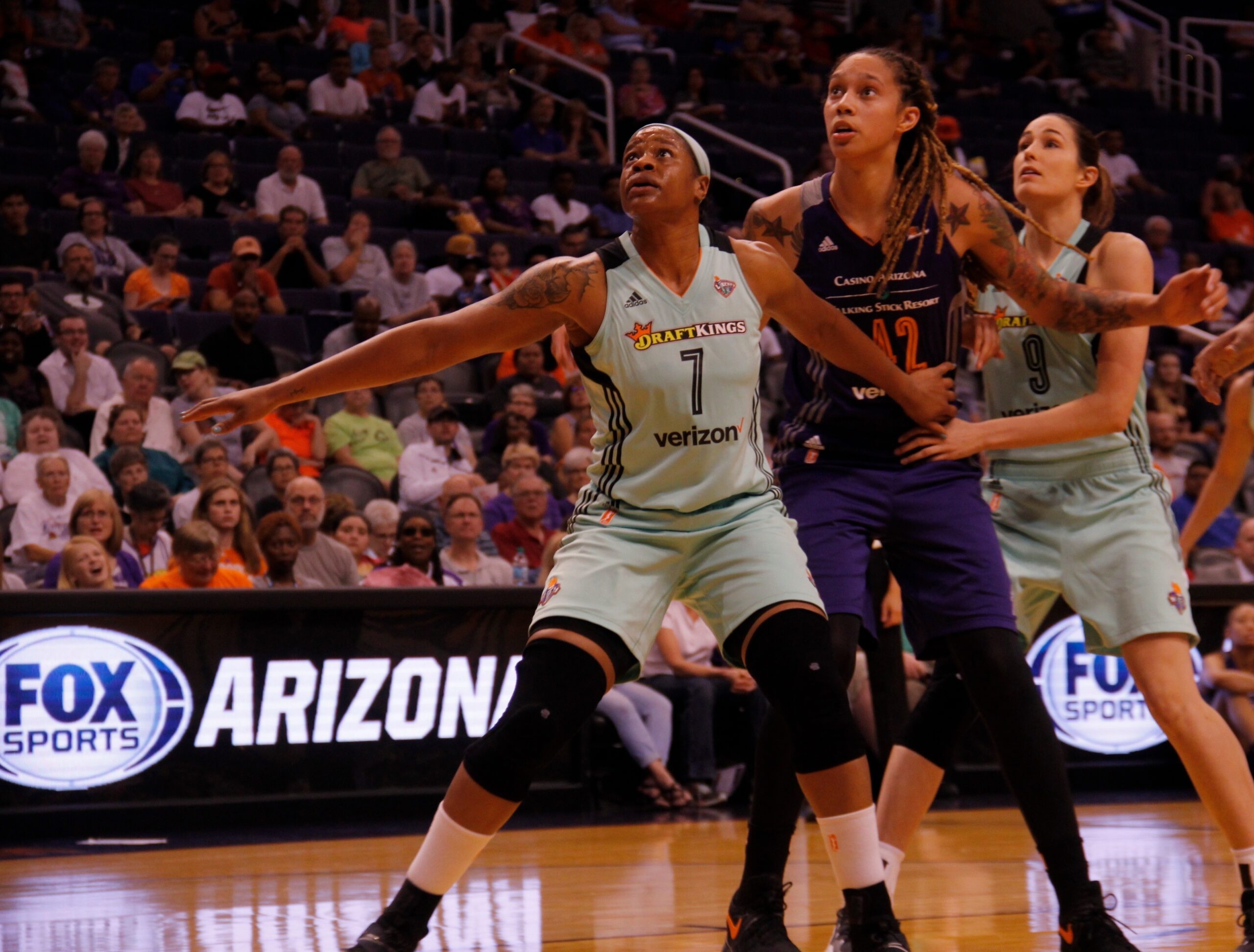
Women’s sports are a lot more popular than they used to be.
Last year, ESPN reported that the WNBA delivered its most-watched regular season in history. In 2023, the FIFA Women’s World Cup (which the US team won that year, by the way) routinely broke domestic viewership records despite games taking place overnight in most US time zones. And, in 2021, the US Open Women’s Championship scored higher ratings than the Men’s Championship.
As audiences grow, advertiser interest naturally follows.
But there’s a paradox at play. One of the reasons demand is so high is because inventory remains scarce, because women’s sports still gets way less mainstream media exposure. A 2023 report by The Team (formerly Wasserman) found that women’s sports only made up 15% of media sports coverage between 2018 and 2022. Prior to that period, research from USC and Purdue suggested that female athletes only got 5% of coverage.
“Women’s sports still suffers from a lack of pre-game, halftime and post-game coverage, which are standard in the men’s space,” said Laura Correnti, CEO of sports marketing agency Deep Blue. “When you start adding up all of those points of access and engagement, the limitation has created a lopsided environment.”
But it’s not just live game coverage. If you’re like me and watch more sports docs than you do actual sports, here’s another example of gender-based media bias. Since 2009, ESPN has produced more than 136 documentaries as part of its “30 for 30” series. By my count, only seven have featured female athletes.
And beyond the lack of inventory, there’s also a measurement gap. Advertisers don’t have access to the same kinds of benchmarking data for women’s sports as they do for men’s, which makes it hard to plan and optimize.
That means even though women’s sports campaigns are mostly bought on a CPM basis, Correnti said, they’re not actually set up to deliver strong reach.
What’s a sports advertiser to do?
What women’s sports lacks in terms of mainstream press coverage, however, it makes up for on social media with creator-led content and high fan engagement. Female athletes, teams and leagues rely on these channels to speak directly to their audiences and build brand awareness – and it’s working, especially for the athletes.
Atlanta Dream star Angel Reese, for example, has roughly 5.2 million followers on Instagram. The entire WNBA only has 3.7 million followers.
Planning media against fandom isn’t easy, though.
In June, Deep Blue partnered with data analytics platform Mondo Metrics to launch the Women’s Sports Index, a data intelligence platform to help advertisers understand and capitalize on trends in women’s sports fandom. The index is powered by MondoTrends, a product that filters through huge sets of publicly available data, including video content on TikTok and YouTube, to benchmark social media analytics in real time.
The Women’s Sports Index goes beyond basic social listening, said Nick Cicero, CEO and founder of Mondo Metrics. Instead of only returning content related to specific queries, it also measures engagement signals across a wider pool of posts to give brands more context.
MondoTrends also allows buyers to track brand lift and purchase intent on campaigns tied to creator partnerships.
“I like to think of it as air traffic control,” said Correnti, “directionally following the signals that the trends and analysis are telling us.”
Both Cicero and Correnti say they hope better measurement will help make women’s sports marketing easier to plan and buy, which, in time, will bring it more into the cultural mainstream.
If you build it, they will come
But Deep Blue isn’t only building tools like the Women’s Sports Index; it’s also helping produce women’s sports content.
The agency has an entire IP division that works with its brand clients to develop partnerships and content deals with women’s sports leagues, creators and media publishers. Rather than just coming in later as an ad buyer, Correnti said, brand clients are involved in every step of the content development process as a strategic partner. In some cases, they even create their own new series.
This new content still requires its own marketing and promotion, of course, but it does add more women’s sports-adjacent inventory, even if most of it is already spoken for by the initial brand sponsor.
Interestingly, most of the brands Deep Blue works with aren’t focused specifically on women’s products or female audiences, with some notable exceptions, such as the New York Liberty’s partnership with Vagisil. Which is good, because there are a lot of male fans watching the games, too.
However, this doesn’t mean men’s and women’s sports audiences are interchangeable. Brands that try to apply their men’s sports playbook to women’s sports are setting themselves up to miss, Correnti said. “You’ll likely find it’s not effective.”
Marketers need to understand how women’s sports fandom translates into engagement and purchase intent. That’s the point of the Women’s Sports Index.
Because the audience is there – they’re just not always reachable on TV.
“We’re seeing the rise of an entire new part of the media ecosystem in women’s sports that is not relying on the traditional model,” said Correnti, “that is focused on engagement and rabid fandom.”
| Partner content |
|
|
How Warner Bros. Discovery Is Creating Value Out Of Dead Air With Pause Ads
Streaming publishers are banking on pause ads to bolster revenue with a more user-friendly ad experience. With programmatic standardization still pending, Warner Bros. Discovery is taking a stab at advancing the capabilities behind its own pause ad formats.
Continue Reading ▷
|
|
In The News
|
|
Peacock just stopped fighting YouTube and joined it. Peacock’s full content library will be bundled into YouTube Premium subscriptions in the U.S. starting early next year.
- What’s included: NFL and NBA (NBC Sports), Universal films (including the “Minions” franchise), and originals like “Real Housewives” and “Love Island USA.”
- The pricing angle: YouTube Premium starts at $8.99/month, meaning users get Peacock access without paying Peacock’s standalone $10.99/month price.
- How it works: Peacock content will live inside YouTube, so viewers never have to leave the platform to watch it — deeper than a typical bundle.
- How it started: Comcast co-CEO Brian Roberts reached out to YouTube CEO Neal Mohan about 9 months ago; a meeting at Google offices led to the partnership.
- Industry context: Traditional media (Comcast, WBD, Disney) is under pressure from tech platforms like YouTube and TikTok eating into viewership; companies are reshaping their business models as consumers cut cable.
- Broader M&A wave: Paramount Skydance acquiring WBD, Fox acquiring Roku, and Comcast prepping to spin off NBCUniversal all signal a rapidly consolidating landscape.
- The Takeaway: Peacock is essentially planting its flag inside YouTube’s massive ecosystem rather than competing for standalone subscribers, signaling that traditional media may increasingly rely on tech platforms for reach rather than going it alone.
The deal is happening. In a memo to staff on Monday, Paramount Skydance CEO David Ellison declared he has no doubts the combination with Warner Bros. Discovery will clear legal hurdles, pledging to “bring these two companies together.” Acknowledging that the uncertainty has affected employees, he urged patience and assured staff that both companies remain separate and independent for now, with the focus squarely on audiences and strategy.
- Paramount Skydance and Warner Bros. Discovery are locked in legal limbo as a federal court weighs whether their $81 billion merger violates antitrust law — a case that could stretch well into next year.
- Paramount said last week it will not proceed with the deal until June 2027, or until legal challenges are resolved, whichever comes first. Twelve states, led by California, and the Writers Guild of America have filed suit against the merger.
- Beginning in October, Paramount must pay Warner shareholders $650 million per quarter in “ticking fees” for each quarter the deal remains unclosed.
- If the deal collapses entirely, Paramount owes Warner a $7 billion breakup fee.
- Paramount has projected $6 billion in annual synergies within three years of closing — savings that cannot begin until the transaction is complete.
- Warner Bros. Discovery executives say the restrictions have not materially affected operations, pointing to continued growth at HBO Max and the strength of its television and film studios.
- The Takeaway: The deal was supposed to be a lifeline for two legacy media companies. The longer it drags on, the more it starts to look like a weight. A CEO memo to staff is as much morale management as strategic signal, but Ellison putting his name on certainty raises the stakes if the deal falters.
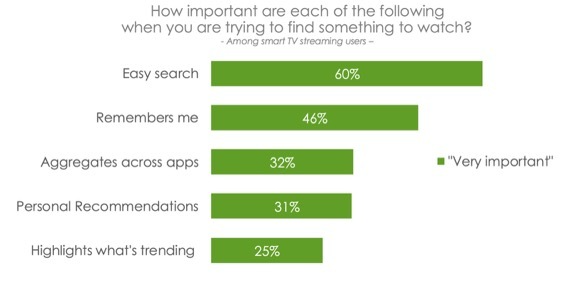
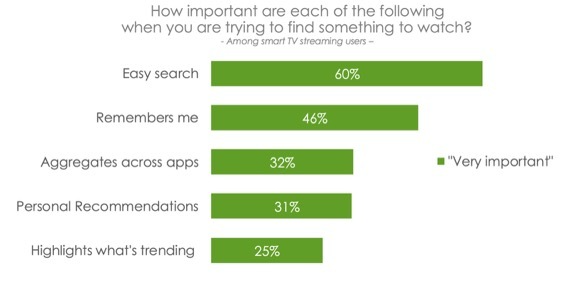
An example question from Hub Entertainment Research’s “2026 Evolution of the TV Set” report.
The race for the living room is more about control than content. Smart TV operating systems have become the primary portal for content discovery and advertising, a dynamic underscored by Fox’s $22 billion bid for Roku. Findings from Hub Entertainment Research’s “2026 Evolution of the TV Set” include:
- Most households own three televisions, and two are now smart TVs.
- Among viewers’ most-used sets, Roku leads the streaming platform market at 37%, followed by Fire TV at 17%, outpacing Android TV, Samsung’s Tizen and Apple TV.
- Easy search tops viewer priorities, with 60% rating it “very important” — nearly double the share who prioritize personalized recommendations (31%) or trending content (25%).
- When it comes to AI-powered features, viewers want tools that filter their experience: 28% want AI to exclude content they dislike, while 27% want it to surface similar titles they’ll enjoy.
- The Takeaway: Fox’s Roku acquisition isn’t a bet on streaming content — it’s a bet on infrastructure. Whoever controls the OS controls what viewers see first, and increasingly, what they see at all. As smart TVs cement their dominance, the platform layer is becoming the most valuable real estate in entertainment.
Cristiano Ronaldo is moving from the pitch to the producer’s chair. The soccer icon is executive producing and appearing in a new drama series starring Damian Lewis (“Billions”) as a sports agent. The project hails from UR*Marv, Ronaldo’s indie studio venture with British filmmaker Matthew Vaughn. The Sun first reported the news.
For the third year in a row, Hulu is suiting up for “Family Guy” Halloween and holiday specials. The spooky installment, “Happy Hell-o-ween,” features “Succession” star Kieran Culkin voicing the Devil after Brian and Stewie’s bad behavior lands them in the underworld. The holiday special puts Peter in the running to claim the town’s Santa title. “Family Guy” Season 25 is slated to return to Fox in 2027.
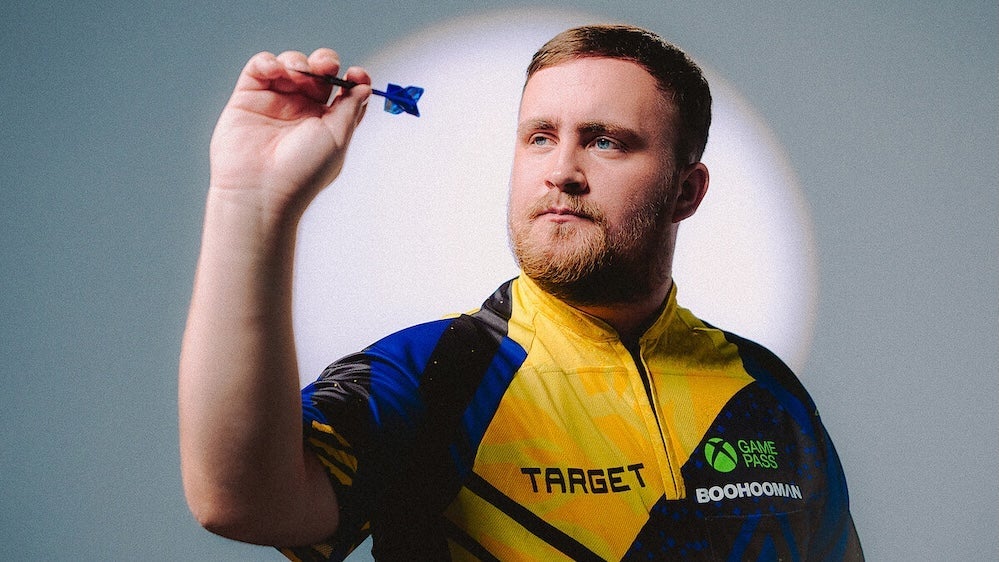
Luke Littler, star of Netflix’s “Beat Luke Littler” event
Netflix is giving UK amateurs one shot — literally — at £501,000 ($667,000) in “Beat Luke Littler,” a live event airing Oct. 30. Challengers will face two-time PDC World Champion Luke “The Nuke” Littler, the 17-year-old prodigy who became the youngest world champ in darts history and recently claimed his second straight World Matchplay title. “Everyone thinks they can beat me,” Littler says. “Now they get a chance to prove it.” Good luck with that.
|
|
|
|
STATISTICALLY SPEAKING
|
|
Even YouTube’s ad revenue growth has its limits. WARC Media predicts that growth rate will drop 7% to $43.2 billion this year and 7.9% to $46.6 billion in 2027.
|
|
|
|
Today’s Premieres
|
|
Food Network: Kitchen Undercover at 9 p.m.
Fox: Beat Shazam at 9 p.m.
|
|
|
|
Trivia Question
|
|
What was Suzanne Somers’ first series regular role after she left “Three’s Company” (1977-84)?
(Email answers to trivia@cynopsis.com and include your name, company and city. Answers limited to four per time zone.)
|
|
|
|
Trivia Answer
|
|
At the conclusion of “Glee” (2008-15), what position did former cheerleading coach Sue Sylvester hold? Vice President of the United States.
Congrats to: Wendy Holmes/Denver; Tom Moore-Kalt Productions/LA; Ed Horwitz-Witz End Productions/Hollywood, CA; Susan Nessanbaum-Goldberg-M and S Entertainment/LA
|
|
|
|