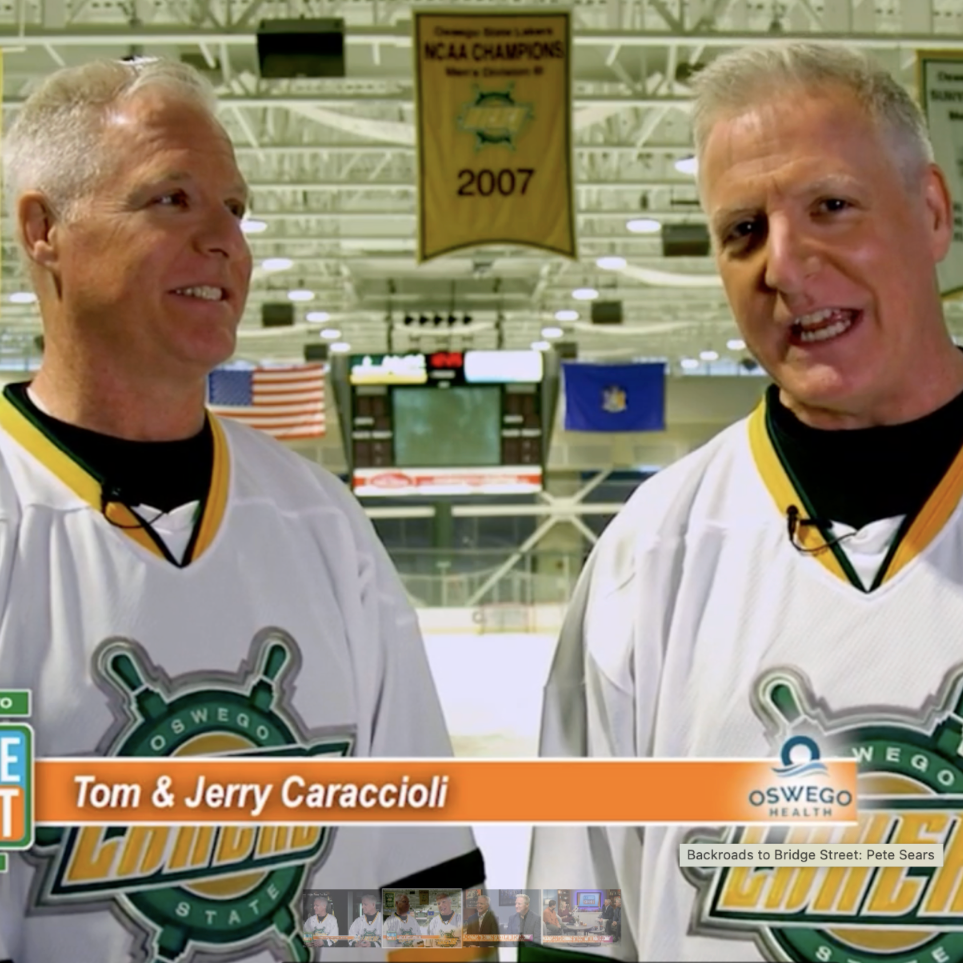
 Many accomplished media executives are looking to pivot – by necessity or by choice. Industry consolidation, restructuring, and AI-driven disruption fueled an 18% rise in layoffs in 2025. But some industry veterans have simply decided to follow their passions to carve out a new place in the business. For Tom and Jerry Caraccioli, former television network communications executives at CBS Sports (Jerry) and NBC/USA Network, Turner Sports and Outdoor Sportsman Group Networks (Tom), that meant going home.
The identical twin brothers have gone from behind-the-scenes to in-front of the camera with a television segment for WSYR-TV Channel 9 (Syracuse, NY) called “Backroads to Bridge Street With Tom and Jerry,” a four-minute monthly segment that offers stories about unique aspects of Central New York, where the two grew up. We asked to Carracciolis to share their experience.
Why did you decide to move from national sports outlets to sharing local stories?
We have been writing all our lives and during the last three years, besides writing a new book, we have been writing columns and contributing stories to various business and general interest magazines in the Northeast. We started to collect a wide variety of topics about interesting people, places and things and thought those same stories can easily translate to television, as well as other multi–media platforms and outlets. Since we are originally from Oswego, NY, we created a proposal, shot a pilot segment, offered a PR and marketing plan to accompany the creative and approached WSYR-TV, Channel 9 in Syracuse. WSYR liked the idea and decided to offer us an opportunity to become on-air storytellers within their daily infotainment show – “Bridge Street.”
How did your time in television prepare you for the leap to on-air work?
It’s interesting, while working in television we sometimes had people approach us and ask if we were on-air. When we explained we worked behind-the-scenes in communications, they would respond, “Well, you guys have a good look for TV.” While flattering, we knew from working with the biggest names in sports television and what they did to get on-air, you don’t just roll out of bed and go on-air. But we paid close attention and asked lots of questions through the course of the work we did. I guess you can say we learned a lot through observation and osmosis, along with the generosity of friends in the industry encouraging us to take a chance.
What lessons have you learned from your experiences behind the scenes that help you now?
A big lesson is the importance of speaking slowly and clearly on camera. We learned these lessons having been in front of cameras serving as spokespersons, but those opportunities weren’t every day. Watching some of the best in the business clearly helped us understand other subtle nuances including posture, backgrounds, lighting, branding, as well as other intricacies. It was our job to pay close attention to the talent and executives we were working with so they represented themselves and the network in the best possible light. We have taken note and try to incorporate those same nuances in our storytelling and on–air presentation.