|
|
| Thursday, October 29, 2026 |
|
|
Good morning, readers! Today’s morning dispatch from Cynopsis includes:
- YouTube Commands Growth In News Viewership
- This Startup Wants To Eat YouTube’s Lunch
- Meanwhile, YouTube Expands Its Content Library And Global Footprint
Much ado about YouTube, in other words. YouTube tops TV charts and continues to gain traction in news viewership while expanding its global reach and content library. But it’s not easy being on top. From established TV networks and streaming services to brand-new startups, plenty of rivals are ready to duke it out with YouTube in an effort to grow their audiences.
But first: We’re hearing from Justin Fromm, head of insights and thought leadership at Samsung Ads, about how the metrics of success for streaming TV growth are changing. Having a large audience base is no longer enough to determine whether a streamer has what it takes to succeed – instead, companies should be more concerned with ensuring their audience base is actually available and engaged with the platforms they choose to use.
|
|
|
|
| Partner content |
|
|
Philo Ads is an innovative and effective way to reach CTV audiences.
Philo Ads offers scalable, brand-safe campaigns built for performance. Ready to capture the attention of our highly engaged audiences? Launch your next campaign with Philo Ads today!
Visit ads.philo.tv to learn more.
|
|
|
Ghost Audiences Are Haunting CTV Measurement
| |
By Justin Fromm, Head of Insights & Thought Leadership at Samsung Ads
|
Streaming is officially an advertising business. According to Antenna, nearly half (48%) of all premium subscription video-on-demand (SVOD) accounts in the US were ad-supported in Q1 2026, and 59% of new subscriptions in the quarter were for ad tiers. US ad-supported Premium SVOD subscriptions, meanwhile, hit 110 million by the same quarter, up from 53 million two years prior.
These shifts are pulling dollars into streaming. CTV upfront spend surpassed linear for the first time this year. Global CTV ad revenues are projected to nearly double, from $44 billion in 2025 to $81 billion by 2030.
And yet the industry continues to value audiences using metrics built for a bygone era. Subscriber counts, monthly active users (MAUs) and platform reach remain useful indicators of business health. They are poor indicators of advertising opportunity or campaign-ready inventory. They tell us who has signed up but not necessarily who is actively watching and reachable.
Audience curation is increasingly moving to the sell side, where OEMs, SSPs and publishers are using deterministic viewing data and real-time signals to get a direct view of who is watching at the glass level.
With audience intelligence moving closer to the point of supply, the question marketers should be asking their media partners is no longer, “How big is your audience?” Instead, they should ask: “How much of your audience is actually showing up?” Viewer loyalty is to the show, not the app. Once a season ends, audiences move on.
While this dynamic is less pronounced in FAST, where viewers can freely move between channels and access a broad range of content without a paid subscription, it can be a major churn issue for subscription-based apps, where viewers have a financial incentive to cancel when they’re no longer watching.
That shift is giving rise to a new measure of value: audience availability.
In a market where inventory is increasingly valued impression by impression, knowing who is available to reach matters more than knowing who subscribed and potentially ghosted.
The audience availability gap
In digital advertising, there is a growing risk of conflating audience size with audience availability. There are now improved ways to think about metrics:
- Audience size is potential: the number of consumers with access to a service. Metrics like MAUs and subscriber numbers signal platform scale but don’t necessarily equate to advertising opportunity.
- Ghost audiences are inactive subscribers. These are consumers who remain subscribed but aren’t actively watching during meaningful three-to-four-month campaign windows. They count toward platform metrics but generate little or no actionable advertising supply.
- Audience availability is audience presence: consumers actively watching while a campaign is running. This is the audience advertisers should be planning against.
- Audience addressability is transactable inventory. This is the subset of available viewers who can actually receive advertising. This is the audience buyers can ultimately bid on and reach.
The closer buying moves to the impression, the more costly it becomes to confuse these audiences. Just because a platform’s audience is large doesn’t mean it’s available. And even if it’s available, it isn’t always addressable.
The delta between the audience a platform reports on and the audience an advertiser can actually reach is the key gap to close.
Consider new viewers who download an app to stream NFL games during the regular season. Samsung Ads recently found that two of every three of these new viewers had “ghosted” the streaming service after the NFL season ended – nearly twice the churn rate of existing users.
These ghost audiences remain part of a platform’s reported audience, yet contribute little to campaign-ready inventory. The result is a widening disconnect between reported audience size and the transactable supply advertisers are actually bidding on.
The next competitive advantage: smarter supply
The industry’s next evolution isn’t happening on the demand side – it’s happening closer to the supply. As selling moves closer to the glass, OEMs and SSPs are evolving from distribution partners into intelligence partners, enriching inventory with real-time viewing signals that help determine the value of every impression before it reaches the auction.
In that environment, competitive advantage will no longer come from reporting the largest audience. It will come from identifying the best available audience at the exact moment an impression becomes available.
The next currency in streaming will be the strongest combination of reach and availability.
“On TV & Video” is a column exploring opportunities and challenges in advanced TV and video.
Follow Samsung Ads and AdExchanger on LinkedIn.
|
Programmatic, FAST And Queerness – The Trifecta Of Revry’s Future
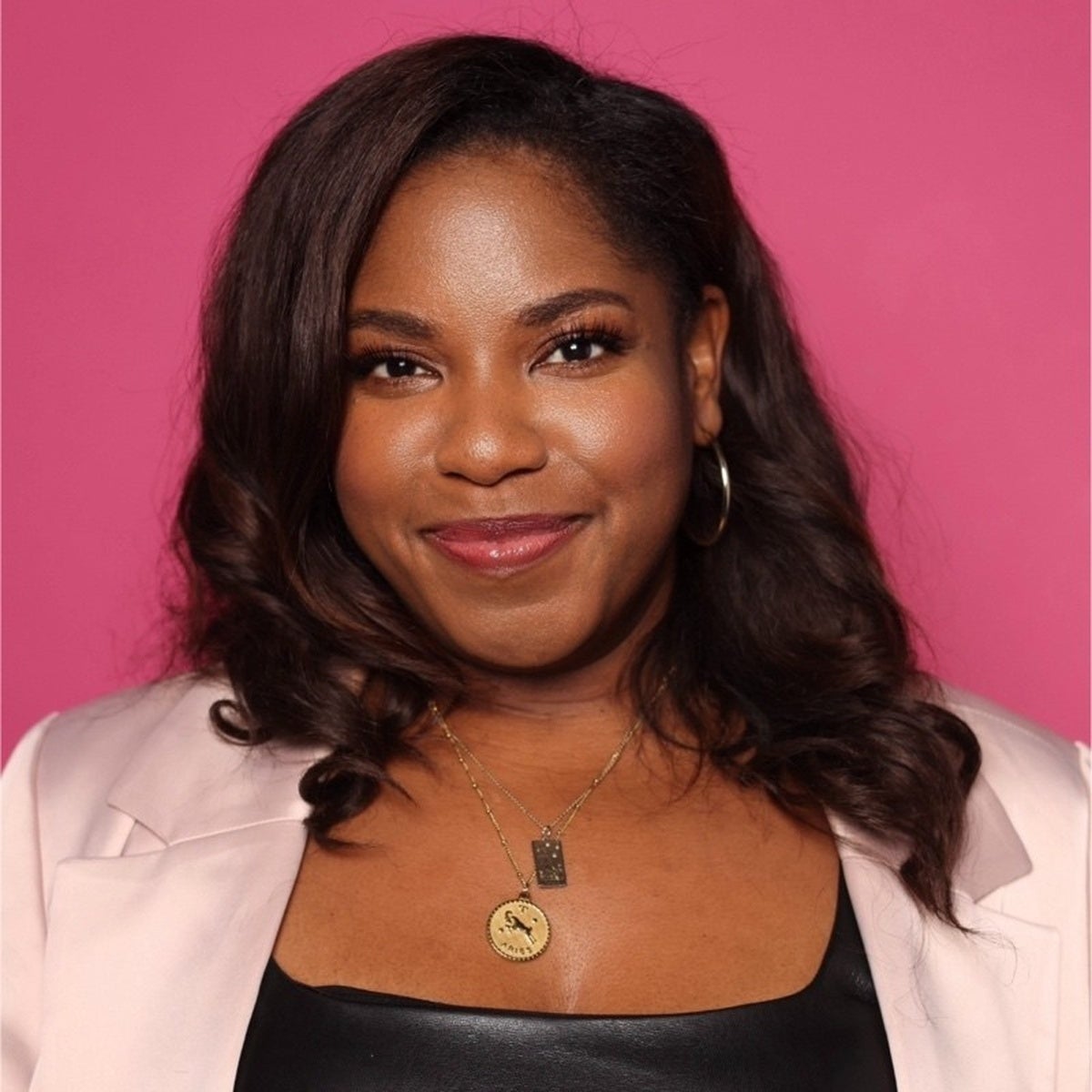
The law-professional-to-queer-media-founder pipeline is not a particularly common one. But it’s exactly how Alia J. Daniels came to co-found Revry, a free streaming platform centering LGBTQ+ storylines.
Continue Reading ▷ |
| In The News |
|

Happy election season! Watch time for news programming is surging in the leadup to the 2026 midterm elections – especially on YouTube. But not every broadcaster is reaping the benefits on owned-and-operated channels.
- Because YouTube dominates TV viewing and younger generations use digital outlets to get their news, it comes as little surprise that TV networks are seeing viewership surge on their YouTube channels ahead of midterms.
- To put some numbers behind the trend, recent data suggests that major networks – such as Fox News, CNN, NBC News, CBS News and ABC News – saw their YouTube audiences rise an average of 20% in September. CNN’s YouTube channel in particular reached 60% more US viewers month over month.
- Beyond YouTube, however, some networks are seeing viewership drop-offs on broadcast and cable. Fox News Channel’s viewership dipped 27% in October compared with this time last year, for example. But even so, Fox ranked No. 1 among all cable networks in total-day viewers over the same period, according to ratings data from Nielsen.
- The disparity between digital and broadcast tune-in may explain why Fox is choosing to emphasize its YouTube viewership in its midweek ratings update. Fox News Channel exceeded 3.8 billion YouTube views so far this year, according to the network. Fox emphasized its digital growth compared with its competition in a ratings email viewed by Streamlined.
Sticking with YouTube, the digital video behemoth may need to brace itself for new competition. Former CNN executive Andrew Morse is building a startup to compete with social video and creator-led platforms, particularly YouTube.
- Morse’s startup, called Phareo, aims to capitalize on the creator economy by offering creators a better deal than the platforms they’re already working with.
- Phareo hopes to stand out with an AI-backed content discovery engine that will serve relevant content to the right viewers more effectively than the algorithms within today’s social video platforms. As a result, creators should expect to see higher viewership, higher engagement and, in turn, higher revenue shares.
- In an interview with Business Insider, however, Morse acknowledges that discovery and scale are Phareo’s initial challenges. Until those hurdles are cleared, it will be challenging to attract a substantial number of creators who are interested in distributing their content on Phareo.
- What’s next? Morse plans to launch the app in January with an initial group of 25 creators. The app will start off entirely free to access, although Morse eventually expects to introduce a paid tier.
Netflix snagged an exclusive deal with TV writer Joseph Kay, well known as the creator and showrunner of the medical drama “Transplant.” As part of the deal, Kay will write and develop new TV titles for Netflix in Canada, beginning with a new family drama that has yet to be named.
- Netflix’s tie-up with Kay marks one of the earlier content deals it has inked since bringing on Peter Rice as chief content creator in an effort to improve its engagement growth.
- However, this deal does not mark the beginning of Kay’s relationship with Netflix. Previously, Kay was a consulting producer for Season 2 of the comedy series “North of North.” He also co-executive produced Netflix’s upcoming adaptation of the novel “This Summer Will Be Different.”
|
|
|
| STATISTICALLY SPEAKING |
|
Seven in 10 Canadian film and TV actors earn less than $20,000 a year from on-screen work, a survey from the Canada Media Fund recently found.
|
|
|
|
| New & Returning Series |
|
For sneak peeks, check out Cynopsis Trailer Park.
HBO documentary “The Slightest Touch,” chronicling an intimate story of pain and the power of friendship starring epidermolysis bullosa survivor Emma Fogarty and Irish actor Colin Farrell (“The Penguin”), premieres Nov. 25.
|
|
|
| Today’s Premieres |
|
CBS: “Ghosts” Season 6 at 9 p.m.
HBO Max: “Cannibal Poet”
Hulu: “Love Island: Australia” Season 8
Netflix: “Balaraw: Blood Island”; “The Fall of El Mayo”
|
|
|
| IN OTHER NEWS |
|
YouTube is partnering with Polish TV network Polsat Television. As part of the deal, thousands of hours of content from Polsat’s programming library will be available to watch on YouTube in Poland. Plus, Polsat is creating new titles exclusively for YouTube in the country.
Meanwhile, YouTube Canada has partnered with the Independent Production Fund to launch two new funding programs aimed at supporting digital creators with more financial backing for content production.
Versant Media, which spun off from Comcast earlier this year, launched four free, ad-supported TV (FAST) channels, bringing its tally of FAST channels up to 13. The new channels comprise popular franchises from Versant’s channel portfolio, which includes CNBC, Oxygen and E!
TikTok teamed up with Tubi, the Fox-owned FAST channel, to launch what the duo calls the Creatorverse Incubator, a creator content hub where Tubi will back 12 creators to develop 10 original series based on their TikTok content.
Ad-measurement firm Comscore inked a deal with sell-side ad platform Magnite to help brands run campaigns across channels based on context. As part of the agreement, Comscore’s predictive audience segments, which are based on viewership and contextual information, are available to buy via Magnite. This helps advertisers find TV and streaming inventory that will reach viewers who are most likely to be receptive to ads for certain products based on context and seasonality, such as allergy medication or Halloween candy.
Speaking of Halloween, spooky season doesn’t have to end this weekend. PBS Distribution announced a monthlong programming special called “Mystery Month,” in which mystery series and crime dramas will take over the free, ad-supported TV channel PBS Drama throughout November.
MeTV Toons will honor the late voice actor Eric Bauza with a one-hour original special called “Hare’s to Bugs! A Bugs Bunny Celebration” as a tribute to his role as the iconic “Looney Tunes” character. The special will air Oct. 31 followed by several episodes of “Bugs Bunny and Friends.”
TV and film director, writer and producer Peter Medak died Tuesday at 88, his family announced. Throughout his career, Medak worked on installments of “Breaking Bad” (2008-13) and “Law & Order: SVU” and multiple episodes of “Homicide: Life on the Street” (1993-99) and Shelley Duvall’s “Faerie Tale Theatre” (1982-87), among other titles.
TV writer and producer Kevin Bleyer died Sunday at 54, his family announced. During his career, Bleyer won four Emmy Awards recognizing his work writing for “The Daily Show.” He also worked on NBC’s “Today” show and “Ronan Farrow Daily” (2014-15) on MS NOW (formerly MSNBC), among other shows.
|
|
|
| Sports Report |
|

Sports entertainment company FloSports struck a deal with the Pac-12, a Division I collegiate athletic conference. Under the agreement, FloSports’ combat sports hub, FloWrestling, will be the exclusive home for the Pac-12’s wrestling events for the next several seasons, starting with the 2026-27 season kicking off Nov. 1.
Turning to football, ESPN touted high tune-in for its “Monday Night Football” coverage of the Week 7 game pitting the Dallas Cowboys against the Philadelphia Eagles, which reached 18.8 million viewers.
|
|
|
| Ratings |
|
“CBS Mornings” reached an average of 1.8 million viewers throughout October, including 300,000 viewers ages 25-54 – representing a 6% increase compared with October last year.
Fox News Channel ended the week of Oct. 19 with 2.1 million prime-time viewers, according to Nielsen data.
Top 10 Broadcast Networks for the Week of Oct. 19
P2+ AA (000)
NBC 6,482
FOX 5,828
ABC 5,246
CBS 4,029
Uni 870
TEL 865
MeTV 600
ION 409
CW 385
GRIT 290
Source: Nielsen Big Data + Panel, Live + Same Day
|
|
|
|
|
On “Sesame Street,” what is the name of Elmo’s father?
Email answers to Trivia@Cynopsis.com and include your name, company and city/state (don’t forget!). Only the first four correct responses from each time zone will be included.
|
|
|
|
YESTERDAY’S TRIVIA ANSWER
|
Which anime series has the most episodes: “One Piece,” “Naruto: Shippuden” or “Dragon Ball Z?” “One Piece,” clocking in at 1,180 episodes (and counting!)
Congrats to: Gerry Bixenspan-TV Marketing Inc./NY; Rosemary Cunningham-MeTV/Chicago, IL; Tom Moore-KaltProductions/LA; Susan Nessanbaum-Goldberg-M and S Entertainment/LA
|
|
|
|
|
|