How Does Agentic Buying Work In CTV?
 |
By Victoria McNally
|
Given how much agentic AI pervades nearly every conversation these days, it’s easy to overlook how nascent the technology still is, particularly when it comes to buying ads on connected TV.
For example, model context protocol (MCP), the open-source standard AI agents use to connect to other applications, was only introduced by Anthropic in late 2024. And it was only last year that a group of ad tech companies developed the Ad Context Protocol based on MCP.
Now, agentic ad buying is no longer hypothetical and, so far at least, it seems to operate with fewer mess-ups than consumer–facing agents, so long as there’s a human making all the final decisions, of course.
To find out what agentic buying looks like in practice, I spoke with David Nyurenberg and Sydney Brower from InterMedia, an independent agency that primarily does CTV ad buying for performance-based companies. A few months ago, InterMedia started using a combination of MCP and API integrations with Vibe.co and Olyzon. Vibe.co is the self-serve CTV buying platform that was recently acquired by Walmart, and Olyzon is a CTV ad decisioning startup that’s also expanded into other digital channels.
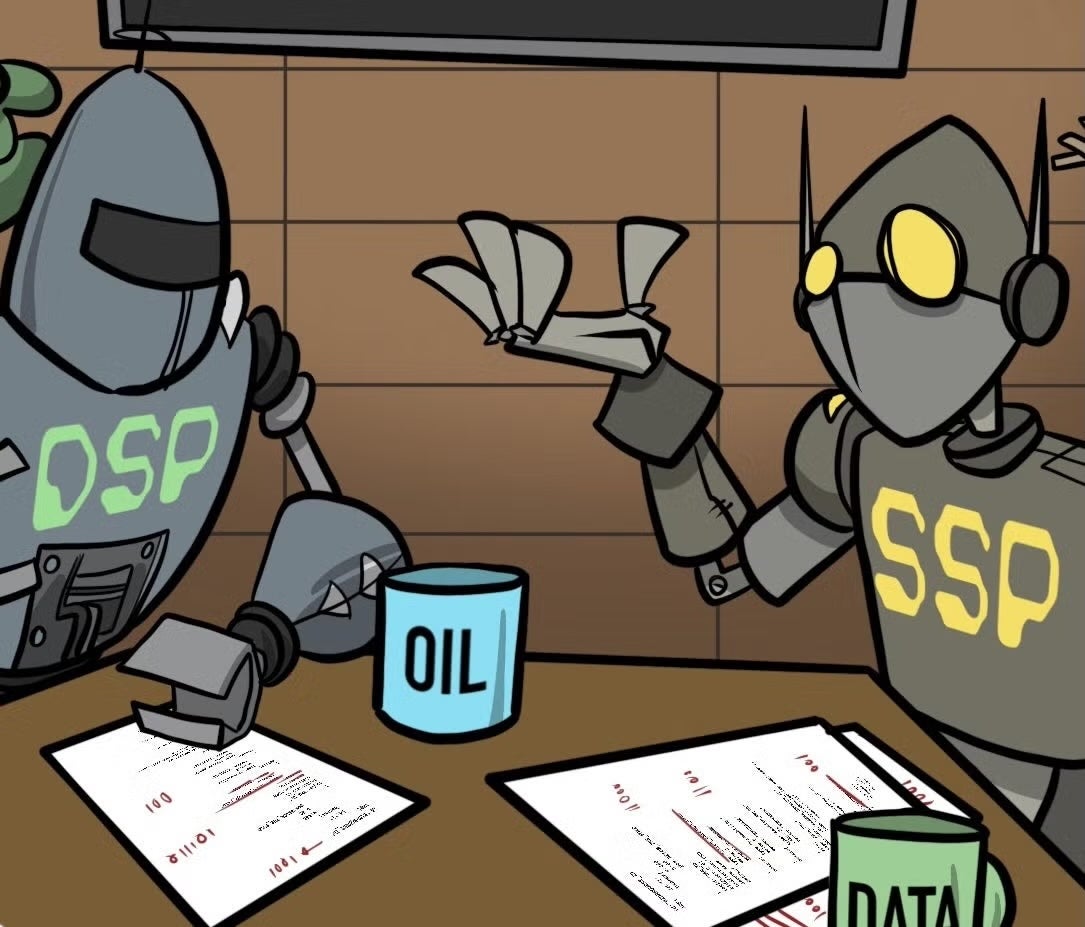
Vibe allows InterMedia to view CTV campaign reporting in Claude’s dashboard and then order specific actions based on that information. Olyzon then connects those campaigns to DSPs and SSPs, enabling ad buying across other channels, such as display and digital out-of-home.
This workflow gives campaign managers more “time and brain power” to devote to deeper, more client-driven thinking, said Brower, InterMedia’s director of digital media and strategy.
It also changes what it means to be an “expert,” added Nyurenberg, InterMedia’s SVP of digital.
“Instead of being an expert in how to navigate a platform and push the buttons and knowing where to go,” he said, “you’re an expert in being judicious about what changes to make.”
How it came together
Vibe’s Claude integration and Olyzon’s Vibe integration are both very recent developments.
For Vibe, the idea grew out of existing internal workflows, said Vibe Co-Founder and CEO Arthur Querou. Many of its employees had organically started using Claude or ChatGPT for ad buying on other channels, so offering the same capability for Vibe itself – the company uses its own ad buying platform to promote itself on CTV – was a natural next step.
InterMedia was one of the first agencies to test Vibe’s Claude integration, which was announced publicly last month along with a bunch of other AI-related integrations. According to Querou, more than 1,000 brands have adopted Vibe’s MCP integration, and MCP-enabled buying now accounts for a large portion of ad spend on the platform.
“SMBs use these tools,” said Querou of the MCP. “They have limited resources, and so they want to be able to use AI to manage their campaigns.”
Around the same time, InterMedia was also testing Olyzon’s AI orchestration layer, which was released on Wednesday during Advertising Week New York.
Technically speaking, Olyzon uses APIs rather than MCP to connect to many of its partner platforms, including Vibe. That’s because APIs are more deterministic, said Co-Founder and CEO Jules Minvielle, meaning they’ll return consistent, repeatable results – which is obviously important when reporting specific data and figures.
“An agent talking to an agent is not the same as having our agents writing what’s needed directly in the API,” said Minvielle.
How it works
One of the benefits of these integrations is that InterMedia is now able to analyze data and make decisions all from one dashboard – in this case, Claude’s. (This was also a huge selling point for Querou when Vibe was developing the tech: “There is no new platform I would use that doesn’t have an MCP,” he told me.)
As a demonstration, while I watched, Nyurenberg prompted Claude with a question about how various CTV campaigns were doing in Vibe. The agent generated a report that outlined how much was being spent across several major publishers, including Peacock, Warner Bros. Discovery, etc., then broke down trends in the data (e.g., increased growth from one inventory source versus another) and pointed out ways to improve performance.
(As a brief aside, you might be wondering who actually owns the agent. It’s a bit unclear, even to the principal players. When InterMedia uses the agentic tool built into Olyzon’s platform, both Nyurenberg and Brower consider that to be Olyzon’s agent. But when InterMedia accesses Vibe through Claude, ownership becomes a little fuzzier. It reminds me of the ambiguity of digital purchases: Do you really own a game or movie if the company can revoke access?)
The agent can also implement performance changes if directed to do so from within Claude, although Brower said she typically prefers to double check from within each DSP dashboard that everything’s been inputted correctly first before giving the go-ahead.
“You can trust AI to fly a plane, but I still want a pilot in the cockpit to watch it,” she said.
And it’s still not a perfect system, of course. Even with the help of MCP, integrating data and functionalities from multiple sources still takes troubleshooting and manual standardization efforts, said Brower, as DSPs often use different terminology to refer to the same concepts.
Still, after just a few months, InterMedia is already using its agentic workflow for the majority of its biddable campaigns, and hopes to integrate direct insertion order functionality into Olyzon’s tool as well.
What’s next?
InterMedia is an early adopter, but others will join before long, Nyurenberg said.
He predicts that many larger agency holding companies and brands, which are already developing their own agents for audience identification and campaign planning purposes, will start building similar media buying integrations in house. But many will likely rely on stitched-together tech from various software-as-a-service partners.
“The agency is going to have to evolve,” said Nyurenberg. “They’re going to have to be experts in agentic and AI who are also experts in marketing.”
Unsurprisingly, Minvielle has a similar take on how the digital marketing industry will evolve thanks to AI. He pointed to a similar debate swirling around demand-side platforms roughly 15 years ago, when holding companies were deciding whether to build their own tech or work with third-party partners.
“My conviction here,” Minvielle said, “is that, in 18 months, every single media buyer in the world will be equipped with a platform like ours.”
|