What Brands Are Getting Wrong About YouTube, According To The Former CMO Of General Motors
Most brands have a YouTube presence. Far fewer have a YouTube strategy.
The paid team runs ads; the owned team manages the channel, often by posting videos into the void; and someone else handles creators. Nobody’s looking at the whole picture, says Norm de Greve.
During his decade-plus tenure as CMO of General Motors and CVS Health – two of the largest advertising spenders in the US – de Greve watched this play out firsthand as YouTube quickly and not so quietly outgrew its reputation as a digital line item.
Earlier this month, de Greve, who also chairs the MMA, joined the advisory board of Pixability, a YouTube-focused AI company.
“Marketing is all video now and, within video, YouTube is the biggest player,” he said. “But when it comes to brands actually having a YouTube strategy, there’s still a lot of room for improvement.”
De Greve spoke with AdExchanger.
AdExchanger: Do you have any free advice for marketers that want to do a better job with YouTube?
NORM DE GREVE: YouTube is now the top-cited source in AI search.
Most marketers are doing the paid side, but they’re not really integrating that across owned and creators, and owned usually just becomes a dumping ground for whatever videos happen to be floating around your company. No one’s managing any of this holistically.
The opportunity for Pixability and for marketers is to look at organic content to see what’s actually working so they can amplify it and get ideas for new content and which creators to allocate money to.
How did you end up on Pixability’s board, and why did you join after leaving GM over the summer?
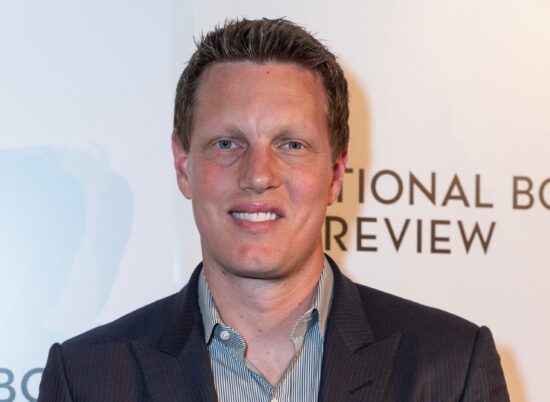
My kids go to the same school as David George’s kids, the CEO. We live in the same town, and it’s a small industry!
To answer your second question, though, the problem of paid, owned and creators running in silos has been around for at least a decade, and there was never an easy fix. What impressed me about Pixability is the results they get when they manage across all three. Turns out, the juice is worth the squeeze.
But what’s really going to push this forward is the impact on AI search, and if you want that, you need best-in-class management across all of it.
If you decided to go back and take the CMO job at a large brand, what’s the first thing you’d change about how they’re using YouTube?
At almost every company, the effort going into YouTube isn’t commensurate with the impact that the channel can have – and that means paid, owned and creators combined. The first question I’d ask walking in the door is whether we’re allocating enough effort. And the answer will probably be “no.”
YouTube mostly gets treated as either just another paid media channel – albeit an important one – or as a social channel. But of those worlds are so separate that nobody’s thinking about how to manage the whole thing to drive results.
How should brands be thinking about measuring creator performance on YouTube?
Creator content generally outperforms brand content if you’re looking at behavioral metrics, but measuring the brand impact is much harder. That’s because you want creators to represent your brand the way you want, but they also have to stay authentic to their own audience. Nobody really has that figured out yet.
There’s a cost question, too. Sponsored posts get less traction than the content that made a creator famous, so you end up paying for the creative and for distribution. The analytics still have a ways to go. Right now, it’s very easy to say, “Look what famous person X did for us.” But that’s really not the standard we hold advertising to.
What’s the biggest mistake large brands are making with AI in marketing right now?
We’re using AI to make old processes smarter instead of redesigning the workflow with AI and agents at the core. Think about the brief. It usually starts with: “Who is the customer?” Well, in a world where I can make a thousand versions of an ad for 80 different segments, that very first question has a problem.
Companies aren’t going to see the productivity gains they want until the workflow gets redesigned around AI, not the other way around.
You’ve spent a lot of your career on the brand side – GM, CVS Health, president of Digitas – so you’ve been a buyer of media technology and you’ve been exposed, I assume, to a heck of a lot of bad ad tech pitches. What makes an ad tech pitch fall flat?
When you literally cannot understand what they’re offering. It’s all “maximize revenue optimization,” and you’re sitting there, like, “I don’t know what you’re saying.”
There was a company I met with twice – I won’t say who they are – and even after that, I still have no idea what they do.
This interview has been lightly edited and condensed.
|