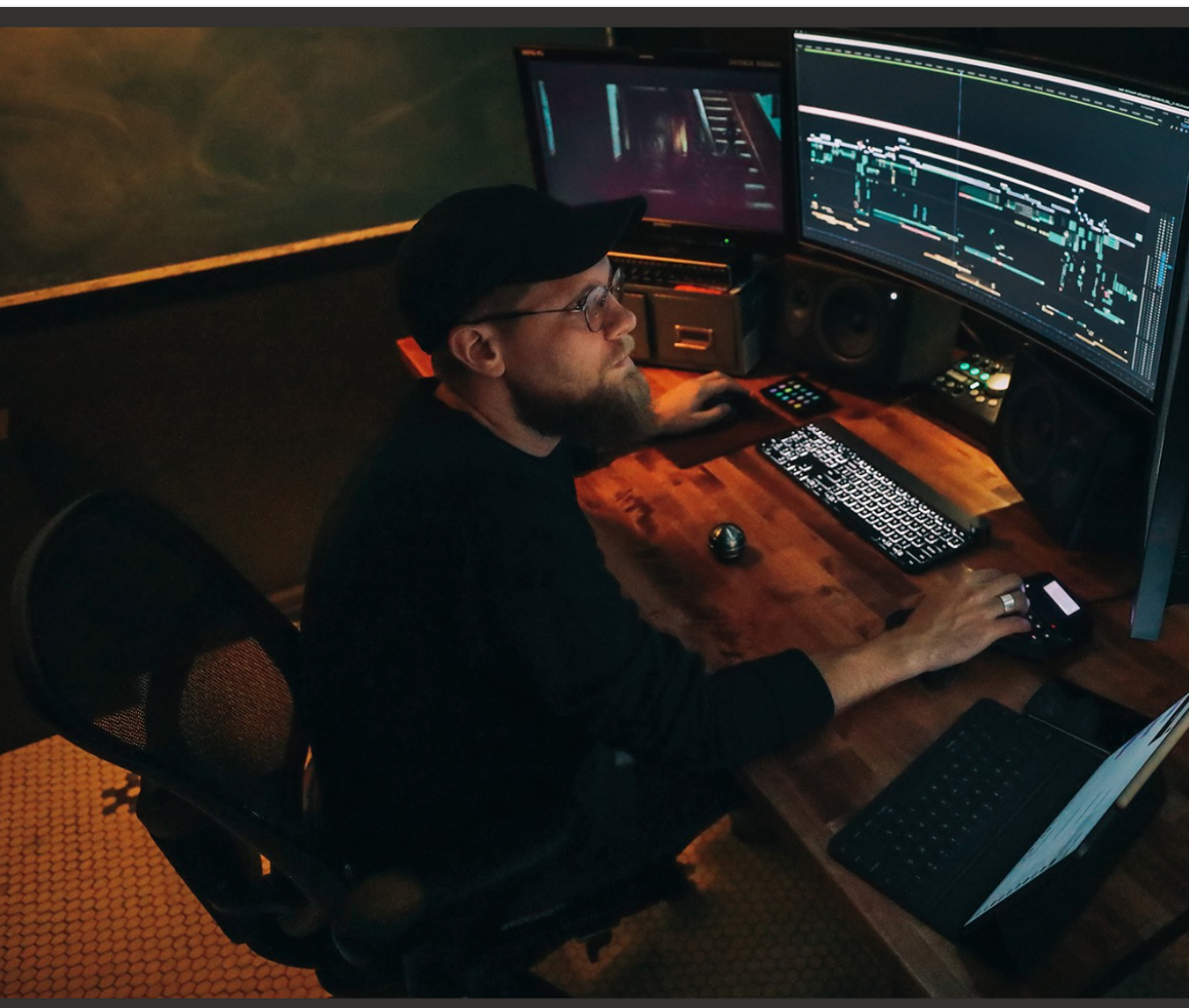
 For editors working at the highest levels of unscripted television, the job is as much about shaping a story as it is about cutting one. Few understand that better than the team at Outpost, the St. Louis-based post-production company behind HBO’s sprawling docuseries “U.S. Against the World.” Lucas Harger, a film and commercial editor and partner at Bruton Stroube Outpost, talks about the editorial process behind a large-scale docuseries, how the company balances work across TV, film and commercials, and why operating out of the Midwest has become less of an anomaly — and more of an advantage.
What is your process as an editor working across a large-scale docuseries for a platform like HBO? How did you work alongside the docuseries’ directors to craft episodes?
Yes, our team at Outpost was involved from the very beginning on “U.S. Against the World,” so before we ever dove into cutting episodes, we had many conversations with Park Stories (the show’s production team) to discuss the shape and structure, as well as the emotional and relationship arcs, and key story points.
Then, our internal team would huddle, get into the edit and establish a first cut as quickly as possible – something that we knew would at least give us the foundation we need to continue honing and sharpening the story.
Once we have a first cut, we’re then collaborating again with the filmmakers on next steps and the direction we want to take the episod
Outpost works across the TV, film and commercial spaces — what’s the internal process like for your team in terms of attacking that work? Does the entire team work across every medium, or are there different leads in different categories?
I’m proud to say that we have an amazing team with an incredibly diverse skillset at Outpost. So while everyone has capabilities working across different mediums, it’s also true that each editor has their own path, interests and areas of focus. Some cutters have a particular talent and creative eye for shortform content, while others really spread their wings in the music video world, and others in feature docs, scripted comedies, etc.
When I’m assigning projects to the team, I’m always considering their skillset first and foremost, but also their trajectory as creatives and the direction they want to go.
What are the main differences between editing for scripted and unscripted projects?
Documentaries are definitely more challenging and demanding. Not to say scripted projects are a cakewalk, but by default, you’re starting with more structure. You have a script, and you’re working based off what’s on the page. There are still challenges, decisions to be made and problems to solve, but the sandbox is a lot smaller.
For a documentary project – especially one like “U.S. Against the World,” which was years in the making – you have to be more comfortable swimming in an ocean of unknowns for a while. There is far more responsibility, and in turn creative space, for an editor to discover and shape the story being told.
Bruton Strobe and Outpost are based in St. Louis. What do you feel are the key differences and advantages of operating from the Midwest?
We love our homebase in St. Louis. It’s definitely intentional that we’re here and not in one of the major hubs, whether that’s LA, New York or even Atlanta. I think one of the key advantages is having the ability to operate from this 50,000 square foot studio, which just wouldn’t be possible in LA or New York – our entire creative team collaborates under the same roof. Another advantage is having this creative haven in the Midwest for really impressive and skilled post-production minds who, for whatever reason, aren’t interested in living on the coasts. It’s also become a great creative playground for our partners – filmmakers, producers – that are either east coast or west coast-based to escape to and work for extended periods of time, away from the usual noise and distractions.
Especially since 2020, we have clients and partners based all over the country, and any stigma around needing to be in LA or NYC to be successful just doesn’t exist anymore.