By Gary Mittman, CEO of KERV.ai
 Shoppable TV often appears effortless. A tap. A scan. A natural step from story to sale.
But what feels seamless to viewers is the result of deliberate design.
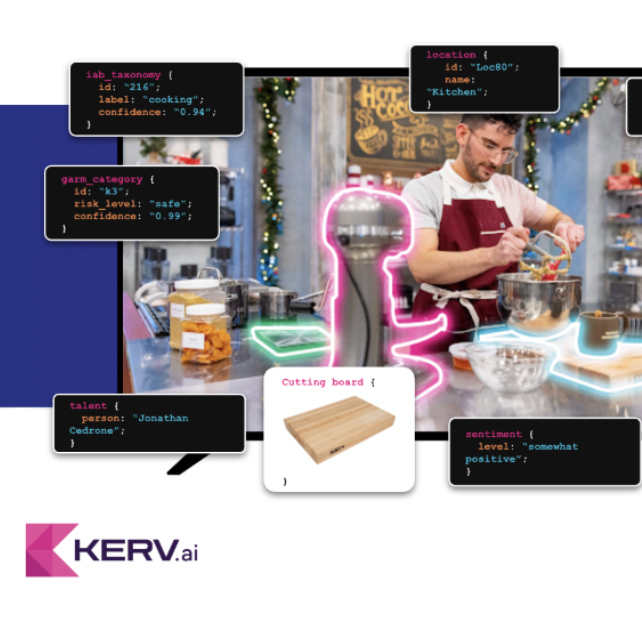
Behind every seamless moment is careful analysis and orchestration of the data on the screen – frame by frame, understanding products, settings, and context as they unfold. It’s complex, precise work designed to respect the viewing experience, not interrupt it.
When done right, shoppable TV doesn’t push. It waits. It’s not a forced experience but a viewer-curated action driven by interest, allowing the audience to engage only when it feels natural.
That distinction matters. Nearly 80% of consumers say they are more comfortable with advertising that’s moment-matched and relevant rather than based on personal data, reinforcing why relevance rooted in the moment feels earned rather than intrusive.
When advertising truly fits the moment, people respond differently.
Research from Comcast’s FreeWheel Viewer Experience Lab shows that contextually aligned ads double viewer engagement and increase brand recall by 20–38% in CTV environments. And many take the next step. More than a third (35%) of consumers have interacted with a shoppable ad on TV when it feels relevant and seamless.
The signals advertising once leaned on are losing their luster as measurement fragments across platforms and consumers grow more cautious about how their data is used. And when the industry gets it wrong, the fallout is immediate: you click one ad once, and suddenly that brand follows you everywhere – across devices, across apps, for weeks. That’s not personalization; it’s brand burnout. Moment-matched relevance steps in to do what those signals no longer can: decide when engagement belongs. But making that decision in real time requires far more coordination than a buy button suggests.
Beyond the Buy Button
What appears to be a single tap conceals a complex layer of coordination. In the seconds between recognition and response, systems identify what appears in the frame, connect it to a product catalog, confirm availability, and determine whether the moment is appropriate for action.
That work happens before a viewer ever reaches for a remote.
Metadata is the information layer translating what’s in a scene into what can be bought, turning a moment of interest into a moment of action. This orchestration exists to protect the viewing experience. When metadata functions properly, commerce aligns with the narrative rather than interrupting it. Engagement feels invited, not inserted.
From Broadcast to Behavior
For decades, television metadata was minimal: a title, a schedule, a short description. Streaming changed that. As content exploded and attention fragmented, metadata had to evolve from basic labeling into real-time interpretation.
Today, advanced signals increasingly operate at the frame and object level, identifying who appears in a scene, what they’re wearing, where they are, and which products are present. TV is no longer just something we watch. It’s something we navigate.
CTV adoption makes this level of interaction and measurement possible at scale. By next year, nearly 90% of U.S. households will have at least one CTV device in the home, and by 2028 ad spending in the channel will surpass traditional TV. As budgets follow behavior, advertisers are demanding what traditional TV never fully delivered: clarity about what worked, why it worked, and what to do next.
Advanced signals close that loop. It connects exposure to engagement, engagement to action, and action back to strategy.
The Challenge of Scale
For all its potential, metadata remains a fragile ecosystem. Each network, studio, and platform defines and structures it differently. Without consistent standards, accuracy and speed become difficult to maintain at scale.
As more content goes interactive, the volume of data expands exponentially. Every frame. Every object. Every behavioral signal. Keeping that data clean, current, and interoperable is now the industry’s biggest obstacle to growth.
Every seamless moment of interactive commerce also depends on a connected value chain. Content owners tag scenes with descriptive detail. Technology partners enrich and standardize that data. Brands link their product catalogs to it, and platforms activate it, turning information into interactive experiences that bridge storytelling and sales.
Some might think the goal is simply more data, but what we need is actionable data, moving in rhythm with the stories it serves.
From Tagging to Tone
The next evolution of metadata goes beyond tagging what’s visible on screen. With help from AI, it’s starting to recognize tonality, emotion and intent to understand what draws people in and what moves them to act.
That shift will change television again. Content will adapt faster, recommendations will feel more natural, and the line between watching and engaging will continue to blur.